

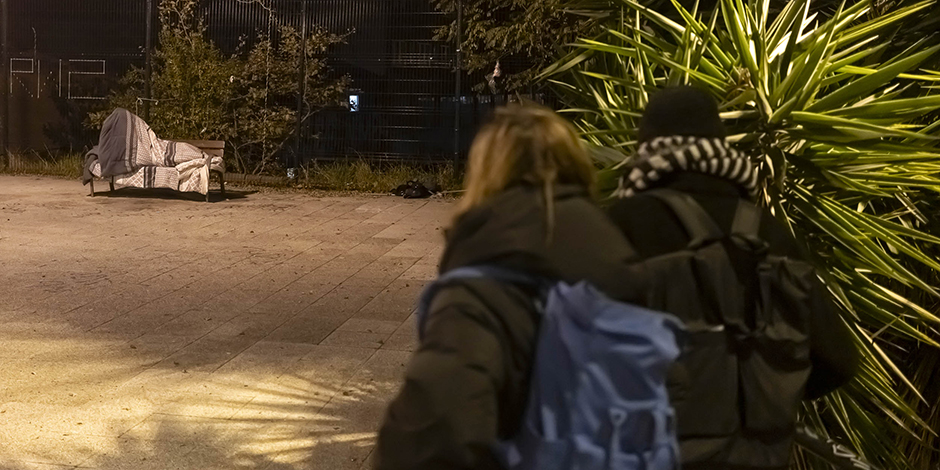
On the night of December 3rd, we went out into the streets to carry out a count of people sleeping rough in Barcelona, thanks to the collaboration of more than 600 volunteer citizens. We walked around the city for four hours in small groups that covered each neighbourhood, and we detected 1,982 people sleeping on the streets. This number of people living outdoors, which represents a 43.2% increase since the last Arrels count of 2023, is a reminder and clear evidence of how necessary it is to have adequate public policies to address this problem.
In eight out of the ten districts of the city, there’s more people sleeping on the streets. Sants-MontjuÏc is the district with the highest number of people sleeping on the streets: 489. The increase is huge compared with the 2023 figure of 209 people: a 134% raise. For the first time, Ciutat Vella is not on the lead of districts with the highest number of people sleeping rough. L’Eixample is the second district with the most people sleeping on the streets, with 389 people. In 2023, we counted 302, which means, and increase of 28,8%. In Sant Martí we counted 335 people living on the streets, compared with 198 in the last count, meaning, in this district, an increase of 69.2%.
Other districts where we found a significant number of people includes Les Corts, where 44 people were registered sleeping on the streets in 2023 and now it has 74 (a 68.2% increase); Horta-Guinardó, with 66 people compared to 44 in 2023 (50% increase). Gràcia, with 67 people compared to 57 two years ago; and Sant Andreu, which now has 60 people on the streets, compared to 49 in 2023.
Ciutat Vella still has many people sleeping on the streets, with 372 detected, compared with the 339 we counted in 2023. In Nou Barris the number of people is nearly the same (from 64 in 2023 to 62 now). Sarrià-Sant Gervasi is the only district where the number of people sleeping on the streets gets lower: in 2023 we detected 78 people sleeping rough, and now we have detected ten fewer.
In 47 out of the 43 neighbourhoods in the city, we found more people living on the streets than in 2023. These are minimum figures. We have not reached areas such as the whole Montjuïc, where we know that many people try to find a place to rest. We have also not included in our total figure the 100 people who, since December 2nd, have been able to use the City Council’s winter emergency shelter and whom we know will return sleeping on the street in a few days.In addition, we are noticing new dynamics in street homelessness, such as groups of people in various parts of the city or tents. On the other hand, this year we went to the airport for the first time, where we found 63 people staying overnight, although we have not added them to the final figure.
What do we think is happening?
The overall picture of street homelessness in Barcelona has changed over the past two years. There are more people sleeping rough, but in different places than they used to a short time ago. Following the evictions carried out over the summer in Parc de la Ciutadella, Estació del Nord, Parc Joan Miró and other locations such as the Nou Barris First Reception Centre, we have detected that some people have been forced to move. There are districts such as Sant Martí, where the number of people living rough has increased in 9 out of its 10 neighbourhoods.
We have also detected a clear increase in the number of people living outdoors in Montjuïc, Zona Franca and the Bon Pastor and Horta neighbourhoods. These are areas where, in previous counts, we had not found a significant number of people compared with the city centre.
“Public-space intervention policies send messages, both to the public and to people experiencing homelessness. Carrying out cleaning and security operations to mitigate homelessness sends a message that is stigmatizing. It does not solve the problem at all, if anything, it makes it worse,” explains Beatriz Fernández, director of Arrels.
Having to stay on the streets exposes people to many risks and forces them to constantly struggle to survive and to access the city’s public and private resources. With the evictions of homeless people that took place in Barcelona in 2025, many individuals have been pushed to move to the outskirts and more industrialised areas. This affects their daily life because the social services they rely on for essential services are now much farther away, and because eviction often means losing all their belongings and the neighbourhood connections that provide them with support. For street outreach teams and social workers who regularly visit people living outdoors, it also becomes difficult to find them again and to rebuild the bond.
What we propose
At Arrels, we call on public authorities to take into account, in their policies, the people who are directly living on the street. They are usually the ones who face the greatest barriers to accessing stable public support services. We propose:
-
- Investing in public housing in general, and planning specific housing solutions for people who live on the street. The 2,000 people we have identified sleeping rough in Barcelona experience different situations of exclusion. For this reason, different alternatives must be developed and adapted to the varying levels of need.
- Amending the regulations of Barcelona’s Social Emergency Committee so that people living on the street also have the right to access social housing through this channel.
- Opening low-threshold day and night spaces in every district of the city.
- Not conditioning access to services on municipal registration (padró) and adopting a proactive policy to ensure registration.
- We understand that responsibilities may be shared among different administrations and may vary in degree, but this cannot be used as an argument for leaving people without assistance. We call for coordination between administrations.
- It is essential to recognise the rights of people living outdoors through the approval of the bill to combat homelessness, which has been under discussion in the Parliament of Catalonia for almost four years.